
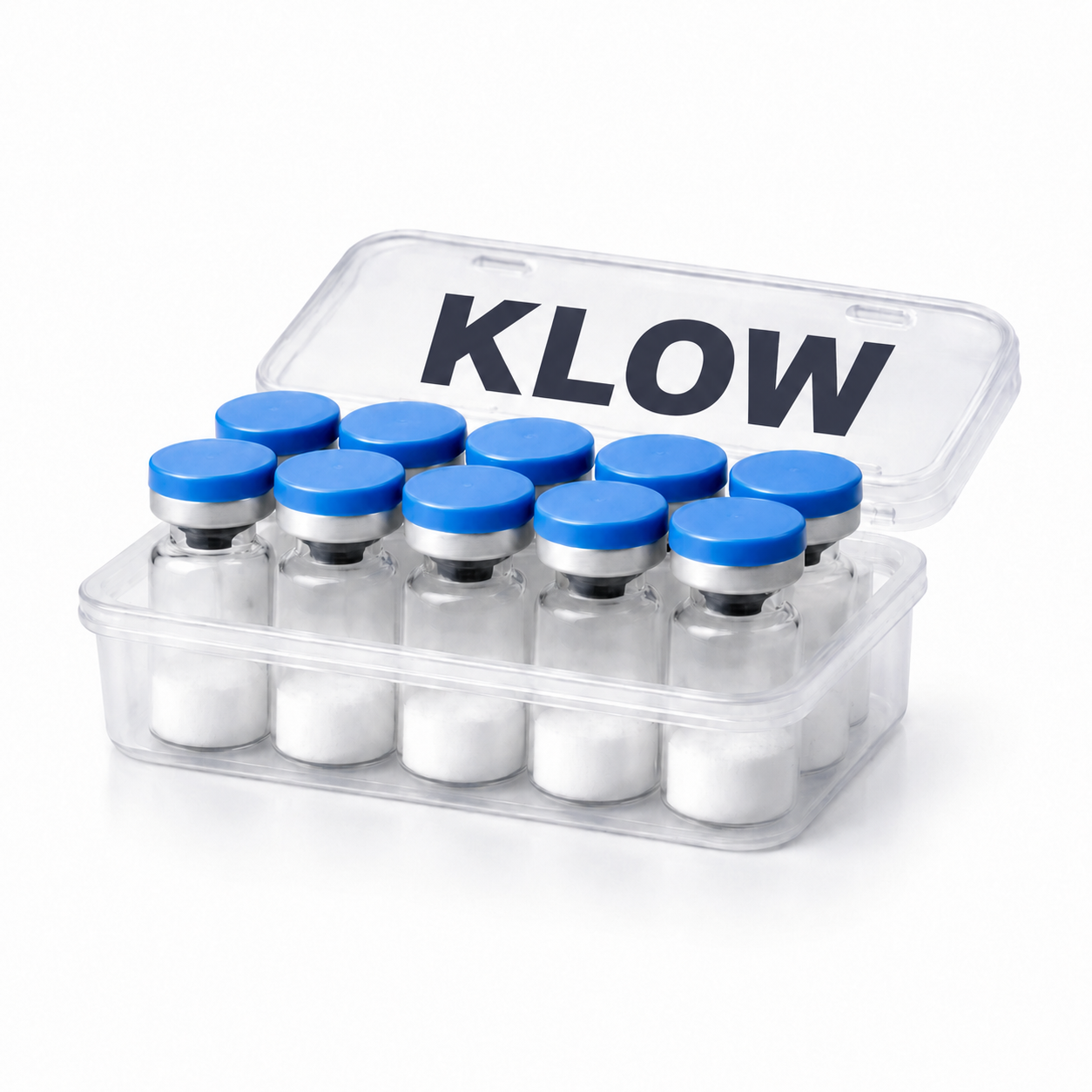
Klow
TB-500 + BPC-157 + GHK-Cu + KPV
Four well-studied research peptides. One blend. Third-party tested by Janoshik. Shipped cold. No filler, no guessing on purity.
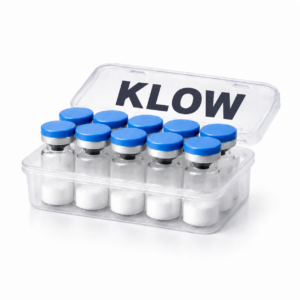
| Product Name | Klow (TB-500 10mg + BPC-157 10mg + GHK-Cu 50mg + KPV 10mg) |
| Form | Lyophilized powder (freeze-dried) |
| Purity | ≥99.2% — third-party tested by Janoshik |
| Components | Thymosin Beta-4 Fragment (TB-500), BPC-157, GHK-Cu (Copper Peptide), KPV |
| Individual Doses | TB-500: 10mg · BPC-157: 10mg · GHK-Cu: 50mg · KPV: 10mg |
| Total Peptide Content | 80mg per vial |
| Storage (sealed) | −20°C, protect from light |
| Storage (reconstituted) | 2–8°C, use within 28 days |
| Reconstitution | Bacteriostatic water (0.9% benzyl alcohol) |
| Testing Lab | Janoshik (independent, third-party) |
| Certificate of Analysis | Available |
| Intended Use | In-vitro research only. Not for human use. |
| Supplier | globalpeptidesofficial.com |
What Is Klow and What’s Actually in It?
Klow is a pre-formulated research peptide blend. It combines four separate peptides into one lyophilized vial. So instead of ordering four separate compounds, researchers work with one.
Here’s what’s inside and why each one matters in research contexts:
Also note: the GHK-Cu dose is higher at 50mg. That’s intentional. Copper peptides are dosed differently in research protocols due to their binding behavior.
Is Klow (TB-500 + BPC-157 + GHK-Cu + KPV) Third-Party Tested?
Yes. Every batch is tested by Janoshik. Janoshik is an independent analytical lab. They’re not affiliated with us. That matters.
First, the batch is produced. Next, a sample goes to Janoshik. Finally, the COA is published before stock is listed for sale. No COA = no sale. Simple rule.
Purity on file: ≥99.2% as measured by HPLC. However, batch-to-batch variation can occur. So always check the COA for your specific lot number.
How Should Researchers Store and Handle Klow?
Sealed vial: −20°C. Keep it away from light. Don’t freeze-thaw repeatedly.
After reconstitution: Store at 2–8°C (standard lab fridge). Use within 28 days. However, stability varies depending on your buffer choice.
First, use bacteriostatic water for reconstitution. But sterile water works too if you’re using the full vial within a few days.
Also, the lyophilized format means longer shelf stability than liquid peptides. So if you’re not using Klow immediately, the powder form is the right choice for storage.
Why Do Researchers Choose a Pre-Blended Format Like Klow?
First: convenience. Fewer vials to manage. Less reconstitution work per session.
But there’s a research-design consideration too. When studying overlapping biological pathways, a fixed-ratio blend lets researchers observe combined effects without titrating four separate compounds.
However, pre-blends also mean less flexibility. If your protocol requires different ratios of BPC-157 to TB-500, individual compounds make more sense.
So Klow is well-suited for exploratory research, not highly controlled single-variable studies. Also, it’s a practical choice for researchers who’ve already decided on this specific compound combination.
You can find more available research peptide formats at globalpeptidesofficial.com.
Where Can Researchers Order Klow with a Valid COA?
Klow is available at Global Peptides Official. That’s the only authorized source we’re listing here.
Orders ship with cold packaging. The COA is attached or available on-site. Also, the product listing includes the Janoshik batch number so you can cross-reference the report directly on the Janoshik website.
Therefore, if you’re ordering for a research project, document your source. Lab compliance and audit trails matter.
Reviews
There are no reviews yet.